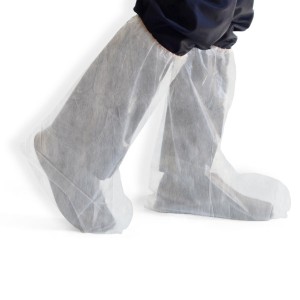
Disposable clothing has become an essential tool for workers in many sectors during their working day, thanks to its numerous advantages. A clear example of this is disposable shoe covers, which, as their name suggests, cover the user’s footwear and provide the best protection for shoes and feet in professional environments such as the food industry, the healthcare and surgical sectors.
Single-use shoe covers protect users from bacteria that may adhere to shoes or feet after stepping on any type of surface, while also preventing possible stains. It is very important not to neglect foot protection, as shoes can harbour more germs than, for example, hands or arms. In settings where hygiene and protection are required, disposable shoe covers play a crucial role.
Types of disposable shoe covers
There are several types of disposable shoe covers, depending on the material from which they are made and the characteristics they provide.
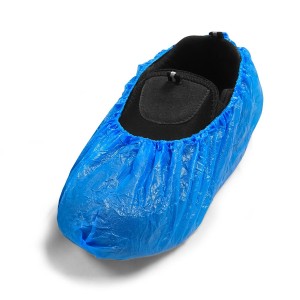
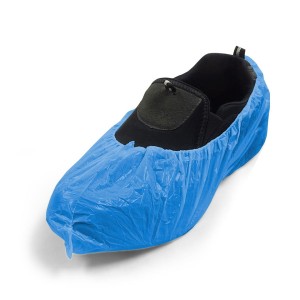
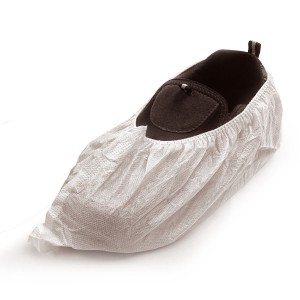
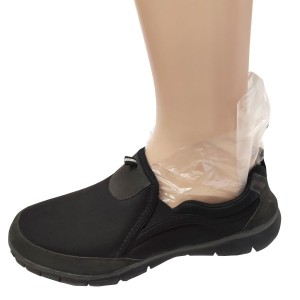
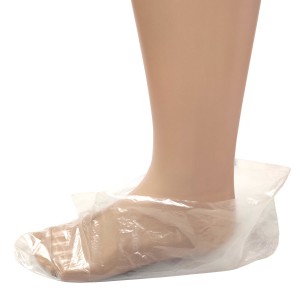
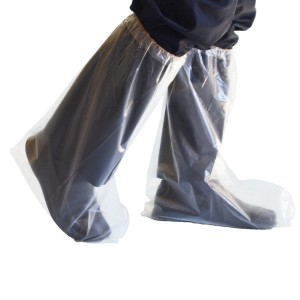
Polyethylene. Single-use shoe covers made from polyethylene prevent contamination carried on footwear, fit around the ankle with an integrated elastic band, are hypoallergenic and non-sterile.
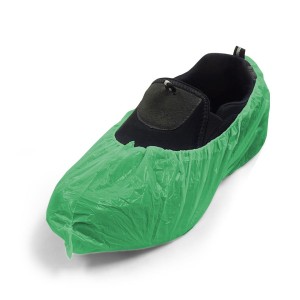
CPE Polyethylene. These shoe covers prevent contamination from footwear, fit the ankle with integrated elastic, are hypoallergenic, non-sterile, and feature an embossed material to help prevent slipping.
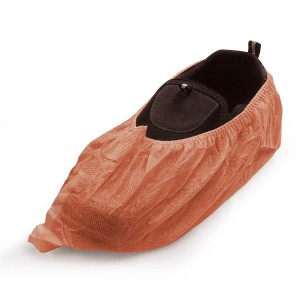
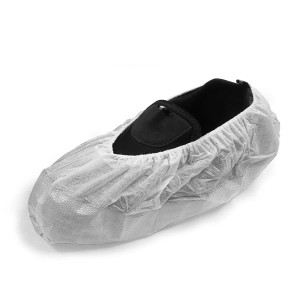
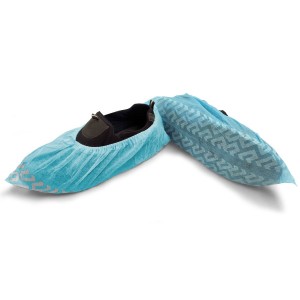
Non-woven Polypropylene. Used in clean rooms, laboratories, food handling areas and healthcare centres; they can also be used to store footwear at home. They include stitching and an elastic band for better fit, and are hypoallergenic and non-sterile.
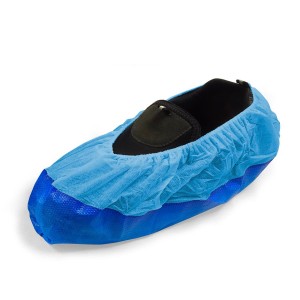
Non-woven Polypropylene + CPE sole. These disposable shoe covers have a reinforced sole made of chlorinated polyethylene (CPE), which is deeply embossed for an anti-slip effect. They include stitching and an elastic band for better fit, and are hypoallergenic and non-sterile.
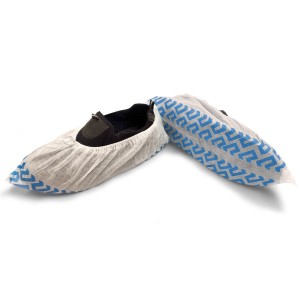
Polypropylene. Disposable polypropylene shoe covers include an anti-slip sole that prevents contamination and slipping thanks to its strongly embossed surface.
In which sectors is the use of disposable shoe covers recommended?
Disposable shoe covers are extremely useful in various sectors where safety, hygiene and personal protection measures must be maximised. As they are single-use and feature an adjustable elastic band, IBP Uniuso’s shoe covers are the perfect accessory for professionals in sectors such as healthcare, the food industry or any other professional environment where prevention and protection must be very high.
How to use disposable shoe covers safely?
Although shoe covers are very easy to use, it is important to follow certain recommendations to ensure safe usage.
Use shoe covers only when necessary, that is, in areas where precautions must be strictly observed.
If they need to be used in different areas or rooms, they must be changed and replaced with new ones each time the area is changed.
Shoe covers must be disposed of correctly in designated containers.
Rooms, areas or spaces with higher hygiene requirements should always have shoe covers available.
In addition, it is important to consider the type of flooring where they will be used to select the shoe cover that offers the best performance. For example, it is preferable to choose models with an anti-slip sole in indoor areas such as medical centres or hospitals.
There is a wide variety of shoe cover models on the market, and not all of them are non-slip. At IBP Uniuso we understand how important workplace safety is, which is why we offer several non-slip models such as the polypropylene shoe cover with a non-slip sole or the polypropylene TNT shoe cover with a reinforced CPE sole. Both models prevent contamination, are highly resistant, and help avoid slipping during use.
All our shoe cover models offer high resistance and protection against materials, substances or liquids that may come into contact from the outside. They are highly resistant, but some of them are not 100% waterproof.
The word hypoallergenic guarantees a lower likelihood of causing allergies or reactions as a result of using that product or material. When something is described as hypoallergenic, it means that its composition does not contain substances that are more likely to trigger allergic reactions. Therefore, these products are manufactured without ingredients that commonly cause reactions and have already been tested and studied for this purpose.
It is simply a product that has been made using methods, substances and materials that minimise the risk of possible allergic reactions when used.